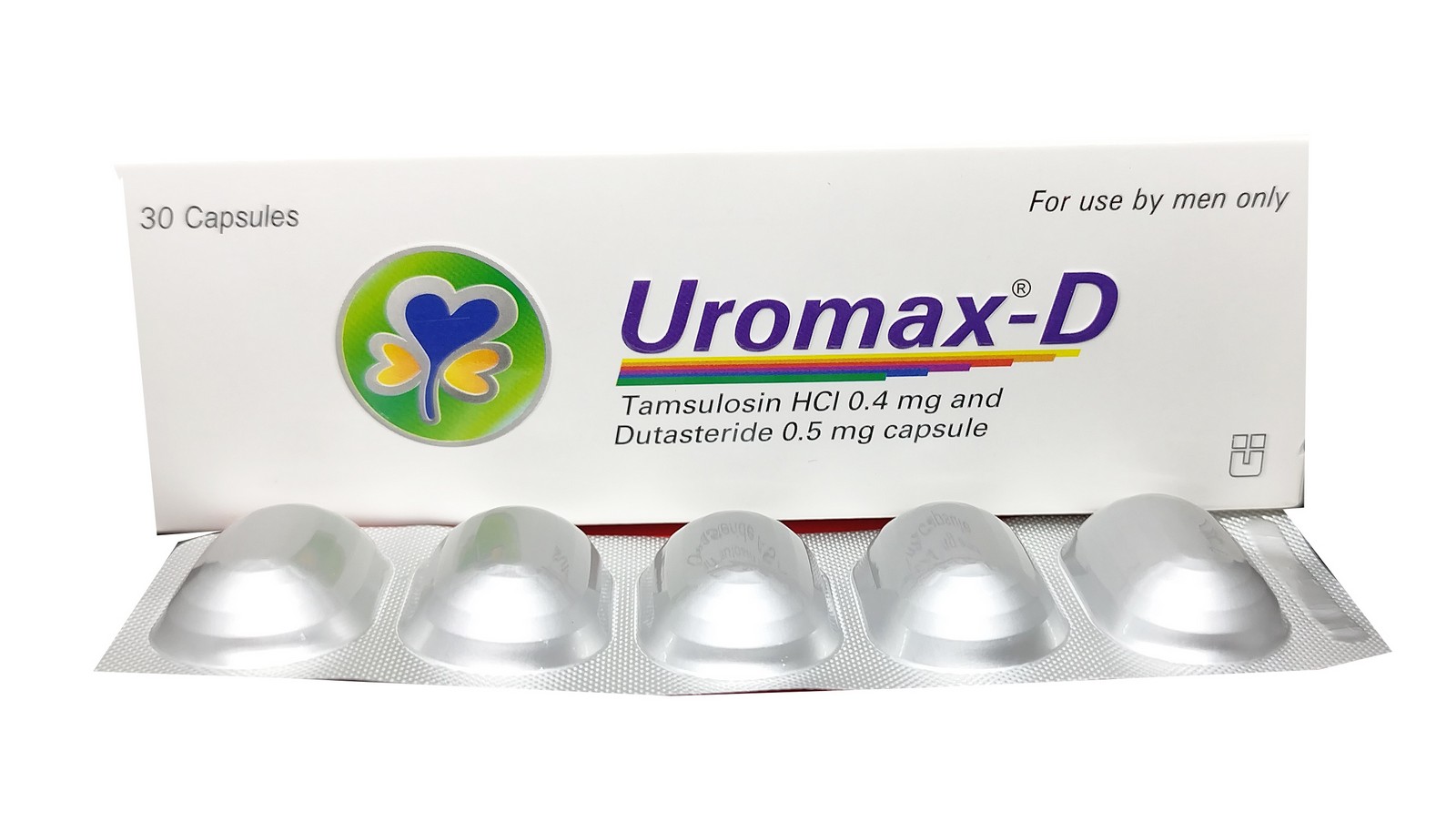
Combination therapy should be prescribed after careful benefit risk assessment due to the potential increased risk of adverse events (including cardiac failure) and after consideration of alternative treatment options including monotherapies.
Cardiac failure: In two 4-year clinical studies, the incidence of cardiac failure was higher among subjects taking the combination of Dutasteride and an alpha blocker, primarily Tamsulosin, than it was among subjects not taking the combination. In these two trials, the incidence of cardiac failure was low (1%) and variable between the studies.
Effects on prostate specific antigen (PSA) and prostate cancer detection: Digital rectal examination, as well as other evaluations for prostate cancer or other conditions which can cause the same symptoms as BPH, must be performed on patients prior to initiating therapy with Tamsulosin-Dutasteride combination and periodically thereafter. Serum prostate-specific antigen (PSA) concentration is an important component in the detection of prostate cancer. Tamsulosin-Dutasteride combination causes a decrease in mean serum PSA levels by approximately 50%, after 6 months of treatment. Patients receiving Tamsulosin-Dutasteride combination should have a new PSA baseline established after 6 months of treatment. It is recommended to monitor PSA values regularly thereafter. Any confirmed increase from lowest PSA level while on Tamsulosin-Dutasteride combination may signal the presence of prostate cancer or noncompliance to therapy with Tamsulosin-Dutasteride combination and should be carefully evaluated, even if those values are still within the normal range for men not taking a 5 alpha-reductase inhibitor. In the interpretation of a PSA value for a patient taking Tamsulosin-Dutasteride combination, previous PSA values while on Dutasteride treatment should be sought for comparison. Treatment with Tamsulosin-Dutasteride combination does not interfere with the use of PSA as a tool to assist in the diagnosis of prostate cancer after a new baseline has been established. Total serum PSA levels return to baseline within 6 months of discontinuing treatment. The ratio of free to total PSA remains constant even under the influence of Tamsulosin-Dutasteride combination. If clinicians elect to use percent free PSA as an aid in the detection of prostate cancer in men undergoing Tamsulosin-Dutasteride combination therapy, no adjustment to its value appears necessary.
Prostate cancer and high grade tumours: Results of one clinical study in men at increase risk of prostate cancer revealed a higher incidence of Gleason 8-10 prostate cancers in Dutasteride treated men compared to placebo. The relationship between Dutasteride and high grade prostate cancer is not clear. Men taking Tamsulosin-Dutasteride combination should be regularly evaluated for prostate cancer risk including PSA testing.
Renal impairment: The treatment of severely renally impaired patients (creatinine clearance of less than 10 ml/min) should be approached with caution as these patients have not been studied.
Hypotension: Orthostatic- As with other alpha-blockers, a reduction in blood pressure can occur during treatment with Tamsulosin, as a result of which, rarely, syncope can occur. Patients beginning treatment with Tamsulosin-Dutasteride combination should be cautioned to sit or lie down at the first signs of orthostatic hypotension (dizziness, weakness) until the symptoms have resolved. In order to minimize the potential for developing postural hypotension the patient should be haemodynamically stable on alpha-blocker therapy prior to initiating use of PDE5 inhibitors. Symptomatic: Caution is advised when alpha adrenergic blocking agents including Tamsulosin are coadministered with PDE5 inhibitors (e.g. sildenafil, tadalafil, vardenafil). Alpha adrenergic blockers and PDE5 inhibitors are both vasodilators that can lower blood pressure. Concomitant use of these two drug classes can potentially cause symptomatic hypotension.
Intraoperative Floppy Iris Syndrome: Intraoperative Floppy Iris Syndrome (IFIS) has been observed during cataract surgery in some patients on or previously treated with Tamsulosin. IFIS may lead to increased procedural complications during the operation. The initiation of therapy with Tamsulosin-Dutasteride combination in patients for whom cataract surgery is scheduled is therefore not recommended. Discontinuing Tamsulosin 1-2 weeks prior to cataract surgery is anecdotally considered helpful, but the benefit and duration of stopping therapy prior to cataract surgery has not yet been established. Leaking Capsule: Dutasteride is absorbed through the skin, therefore, women, children and adolescents must avoid contact with leaking capsules. If contact is made with leaking capsules, the contact area should be washed immediately with soap and water.
Hepatic impairment: Tamsulosin-Dutasteride combination has not been studied in patients with liver disease. Caution should be used in the administration of Tamsulosin-Dutasteride combination to patients with mild to moderate hepatic impairment.
Breast neoplasia: Breast cancer has been reported in men taking Dutasteride in clinical trials and during the post-marketing period. Physicians should instruct their patients to promptly report any changes in their breast tissue such as lumps or nipple discharge. Currently it is not clear if there is a causal relationship between the occurrence of male breast cancer and long term use of Dutasteride.