Medicine
Square Pharmaceuticals PLC
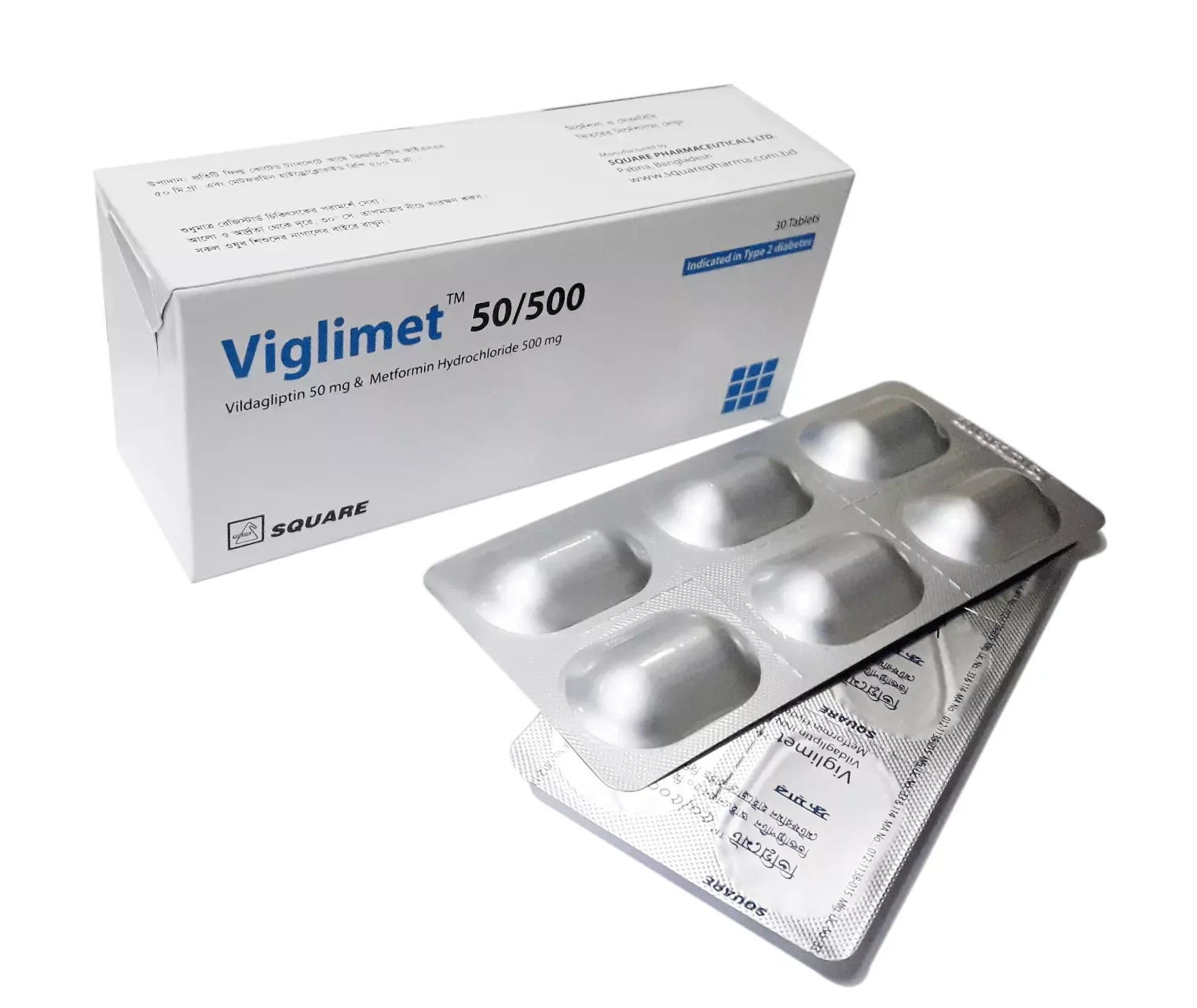
Viglimet 500 Tablet - (500mg+50mg)
Vildagliptin + Metformin Hydrochloride
- 50 mg+500 mg
- Tablet
- Strip
৳ 13
In stock

Vildagliptin + Metformin Hydrochloride
Active ingredient
4 brands we deliver · 33 more sold in Bangladesh
This information is general. Ask your doctor or pharmacist before taking or switching any medicine.
Live prices from our catalogue — add any of them to your cart.
Square Pharmaceuticals PLC
Vildagliptin + Metformin Hydrochloride
In stock
Drug International Ltd
Vildagliptin + Metformin Hydrochloride
In stock
Novartis
Vildagliptin + Metformin Hydrochloride
In stock
Drug International
Vildagliptin + Metformin Hydrochloride
In stock
Listed for reference only — no price and no ordering here.
Aptin M
50 mg+500 mg · Tablet
ACI Limited
Aptin M
50 mg+850 mg · Tablet
ACI Limited
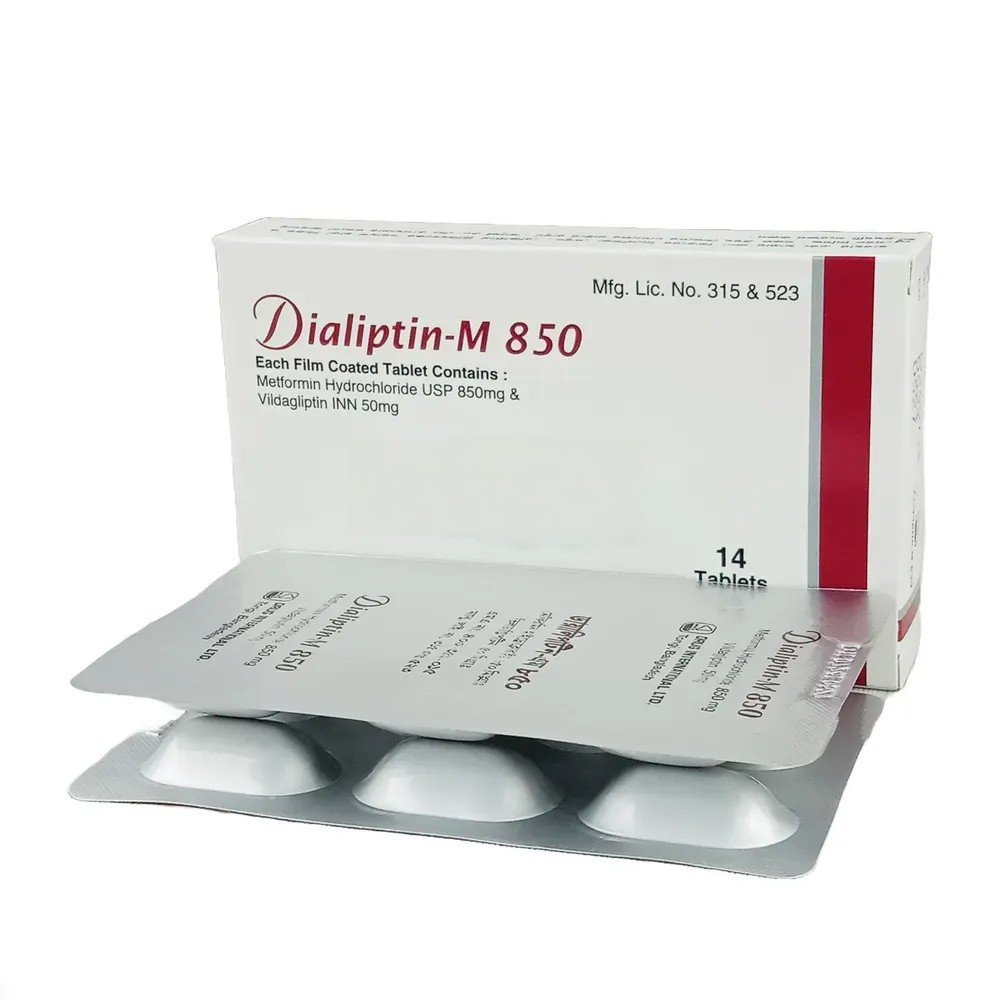
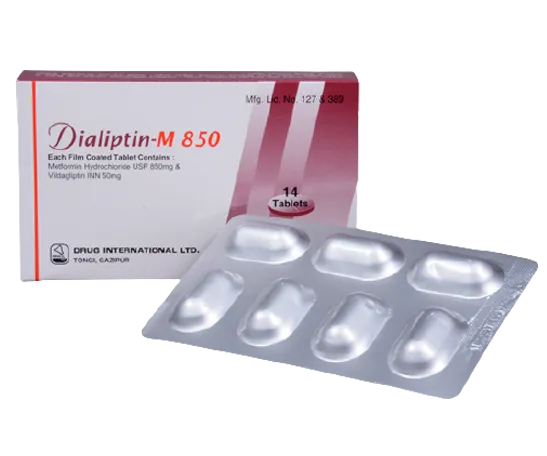
Dialiptin-M
50 mg+500 mg · Tablet
Drug International Ltd.
Edvila-M
50 mg+500 mg · Tablet
Healthcare Pharmaceuticals Ltd.
Edvila-M
50 mg+850 mg · Tablet
Healthcare Pharmaceuticals Ltd.
Formet V
50 mg+500 mg · Tablet
Biopharma Limited
Galet M
50 mg+500 mg · Tablet
The White Horse Pharmaceuticals Ltd.
Galet M
50 mg+850 mg · Tablet
The White Horse Pharmaceuticals Ltd.
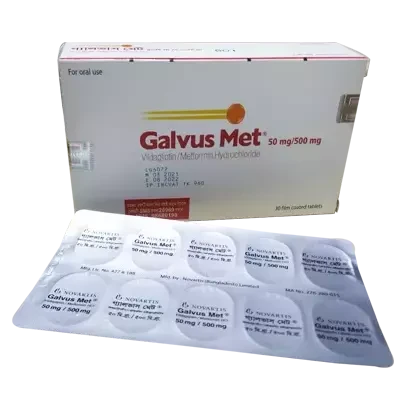
Galvus Met
50 mg+850 mg · Tablet
Nevian Lifescience PLC
Glipagen Plus
50 mg+850 mg · Tablet
Biogen Pharmaceuticals Ltd.
Gluvan Plus
50 mg+500 mg · Tablet
Aristopharma Ltd.
Gluvan Plus
50 mg+850 mg · Tablet
Aristopharma Ltd.
This tablet is indicated as an adjunct to diet and exercises to improve glycaemic control in patients with type 2 diabetes mellitus whose diabetes is not adequately controlled on Metformin Hydrochloride or Vildagliptin alone or who are already treated with the combination of Vildagliptin and Metformin Hydrochloride, as separate tablets.
This combination is contraindicated in patients with known hypersensitivity to Vildagliptin or Metformin Hydrochloride or to any of the excipients. It is contraindicated in patients with renal disease or renal dysfunction, acute myocardial infarction, and septicaemia. It is also contraindicated in patients with congestive heart failure patients and in patients with acute or chronic metabolic acidosis, including diabetic ketoacidosis, with or without coma. It should be temporarily discontinued in patients undergoing radiologic studies involving intravascular administration of iodinated contrast materials, because use of such products may result in acute alteration of renal function.
The most common side effects are headache, tremor, dizziness, nausea, hypoglycaemia etc.
Source: medex.com.bd — View source
Each note below describes one brand at one strength in one form. It is not general guidance for the ingredient.
This tablet is indicated as an adjunct to diet and exercises to improve glycaemic control in patients with type 2 diabetes mellitus whose diabetes is not adequately controlled on Metformin Hydrochloride or Vildagliptin alone or who are already treated with the combination of Vildagliptin and Metformin Hydrochloride, as separate tablets.
Vildagliptin acts primarily by inhibiting DPP-4 (Dipeptidyl peptidase-4), the enzyme responsible for the degradation of the incretin hormones GLP-1 (glucagon-like peptide-1) and GIP (glucose-dependent insulinotropic polypeptide). The administration of Vildagliptin results in a rapid and complete inhibition of DPP-4 activity resulting in increased fasting and postprandial endogenous levels of the incretin hormones GLP-1 and GIP. By increasing the endogenous levels of these incretin hormones, Vildagliptin increases insulin secretion from the pancreatic beta cell and decreases glucagon secretion from alpha cell. The enhanced increase in the insulin/glucagon ratio during hyperglycaemia due to increased incretin hormone levels results in a decrease in fasting and postprandial hepatic glucose production, leading to reduced glycaemia.
Metformin Hydrochloride is a biguanide type oral antihyperglycemic drug used in the management of type 2 diabetes. It lowers both basal and postprandial plasma glucose. Its mechanism of action is different from those of sulfonylureas and it does not produce hypoglycemia. Glucomin decreases hepatic glucose production, decreases intestinal absorption of glucose and improves insulin sensitivity by an increase in peripheral glucose uptake and utilization.
Adults: Based on the patient's current dose of Metformin, this combination may be initiated at twice daily, 1 tablet in the morning and the other in the evening. Patients receiving Vildagliptin and Metformin from separate tablets may be switched to this combination containing the same doses of each component. Doses higher than 100 mg of vildagliptin are not recommended. There is no clinical experience of Vildagliptin and Metformin in triple combination with other antidiabetic agents. Taking this combination with or just after food may reduce gastrointestinal symptoms associated with Metformin.
No clinically relevant pharmacokinetic interaction was observed when Vildagliptin (100 mg once daily) was co-administered with Metformin Hydrochloride (1,000 mg once daily). Vildagliptin has a low potential for drug interactions. Since Vildagliptin is not a cytochrome P (CYP) 450 enzyme substrate nor does it inhibit nor induces CYP 450 enzymes, it is not likely to interact with co-medications that are substrates, inhibitors or inducers of these enzymes. As a result of these studies no clinically relevant interactions with other oral antidiabetics (glibenclamide, pioglitazone, metformin hydrochloride), amlodipine, digoxin, ramipril, simvastatin, valsartan or warfarin were observed after co-administration with vildagliptin. On the other hand, furosemide, nifedipine and glyburide increase Cmax and blood AUC of Metformin with no change in renal clearance of Metformin.
This combination is contraindicated in patients with known hypersensitivity to Vildagliptin or Metformin Hydrochloride or to any of the excipients. It is contraindicated in patients with renal disease or renal dysfunction, acute myocardial infarction, and septicaemia. It is also contraindicated in patients with congestive heart failure patients and in patients with acute or chronic metabolic acidosis, including diabetic ketoacidosis, with or without coma. It should be temporarily discontinued in patients undergoing radiologic studies involving intravascular administration of iodinated contrast materials, because use of such products may result in acute alteration of renal function.
The most common side effects are headache, tremor, dizziness, nausea, hypoglycaemia etc.
There are no adequate and well controlled studies in pregnant women and therefore, this combination should not be used during pregnancy unless the potential benefit justifies the potential risk to the foetus. No studies have been conducted with the components of this combination. As it is not known whether Vildagliptin and/or Metformin Hydrochloride is excreted in human milk this combination should not be administered to breast-feeding women.
Lactic acidosis can occur due to Metformin accumulation. If metabolic acidosis is suspected, treatment should be discontinued and the patient should be hospitalized immediately. Serum creatinine should be monitored at least once a year in patients with normal renal function and 2–4 times a year in patients with serum creatinine levels at the upper limit of normal and in elderly patients. Special caution should be exercised in elderly patients where renal function may become impaired (e.g. when initiating antihypertensives, diuretics or NSAIDs). It is recommended that Liver Function Tests (LFTs) are monitored prior to initiation of Vildagliptin + Metformin Hydrochloride, at three-monthly intervals in the first year and periodically thereafter. If transaminase levels are increased, patients should be monitored with a second liver function evaluation to confirm the finding and be followed thereafter with frequent liver function tests until the abnormality return to normal. If AST or ALT persist at 3 x ULN, Vildagliptin & Metformin tablets should be stopped Patients who develop jaundice or other signs of liver dysfunction. Following withdrawal of treatment with Vildagliptin & Metformin and LFT normalization, treatment with Vildagliptin & Metformin should not be reinitiated. Vildagliptin & Metformin tablets should be discontinued 48 hours before elective surgery with general anaesthesia and should not usually be resumed earlier than 48 hours afterwards.
Use in pediatric patients: The safety and effectiveness of Vildagliptin + Metformin Hydrochloride in pediatric patients have not been established. Therefore, Vildagliptin + Metformin Hydrochloride is not recommended for use in children below 18 years of age.
Use in geriatric patients: As Metformin is excreted via the kidney, and elderly patients have a tendency to decreased renal function, elderly patients taking Vildagliptin + Metformin Hydrochloride should have their renal function monitored regularly. Vildagliptin + Metformin Hydrochloride should only be used in elderly patients with normal renal function.
Patients with renal impairment: Vildagliptin + Metformin Hydrochloride should not be used in patients with renal failure or renal dysfunction, e.g. serum creatinine levels > 1.5 mg/dl (>135 micro mol/L) in males and > 1.4 mg/dl (>110 micro mol/L) in females.
Patients with hepatic impairment: Vildagliptin + Metformin Hydrochloride is not recommended in patients with hepatic impairment including patients with a pre-treatment ALT or AST >3 X the upper limit of normal.
Combination Oral hypoglycemic preparations
Keep in a dry place away from light and heat. Keep out of the reach of children.
Source: medex.com.bd — View source
Other generics in Antidiabetics