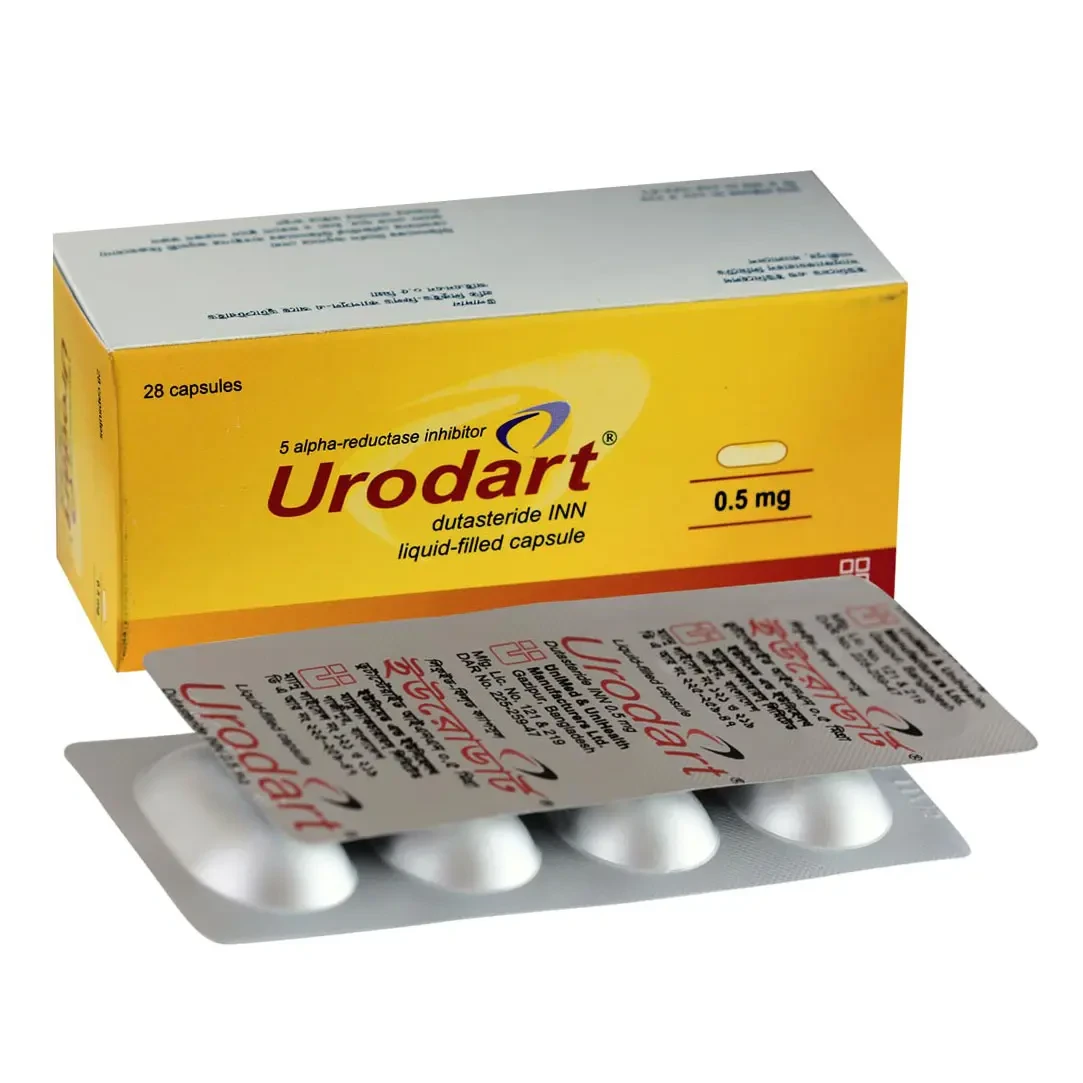
General: Lower urinary tract symptoms of BPH can be indicative of other urological diseases, including prostate cancer. Patients should be assessed to rule out other urological diseases prior to treatment with Dutasteride. Patients with a large residual urinary volume and/or severely diminished urinary flow may not be good candidates for 5 a-reductase inhibitor therapy and should be carefully monitored for obstructive uropathy. Blood Donation: Men being treated with Dutasteride should not donate blood until at least 6 months have passed following their last dose. The purpose of this deferred period is to prevent administration of Dutasteride to a pregnant female transfusion recipient.
Use in hepatic impairment: The effect of hepatic impairment on Dutasteride pharmacokinetics has not been studied. Because Dutasteride is extensively metabolized and has a half-life of approximately 5 weeks at steady state, caution should be used in the administration of Dutasteride to patients with liver disease.
Effects on prostate-specific antigen and prostate cancer detection: Digital rectal examinations, as well as other evaluations for prostate cancer, should be performed on patients with BPH prior to initiating therapy with Dutasteride and periodically thereafter. Dutasteride reduces total serum PSA concentration by approximately 40% following 3 months of treatment and approximately 50% following 6, 12, and 24 months of treatment. This decrease is predictable over the entire range of PSA values, although it may vary in individual patients.